 opaya
What Makes Hermes Different From Other Agent Runtimes
Long-running agents, not chat windows.
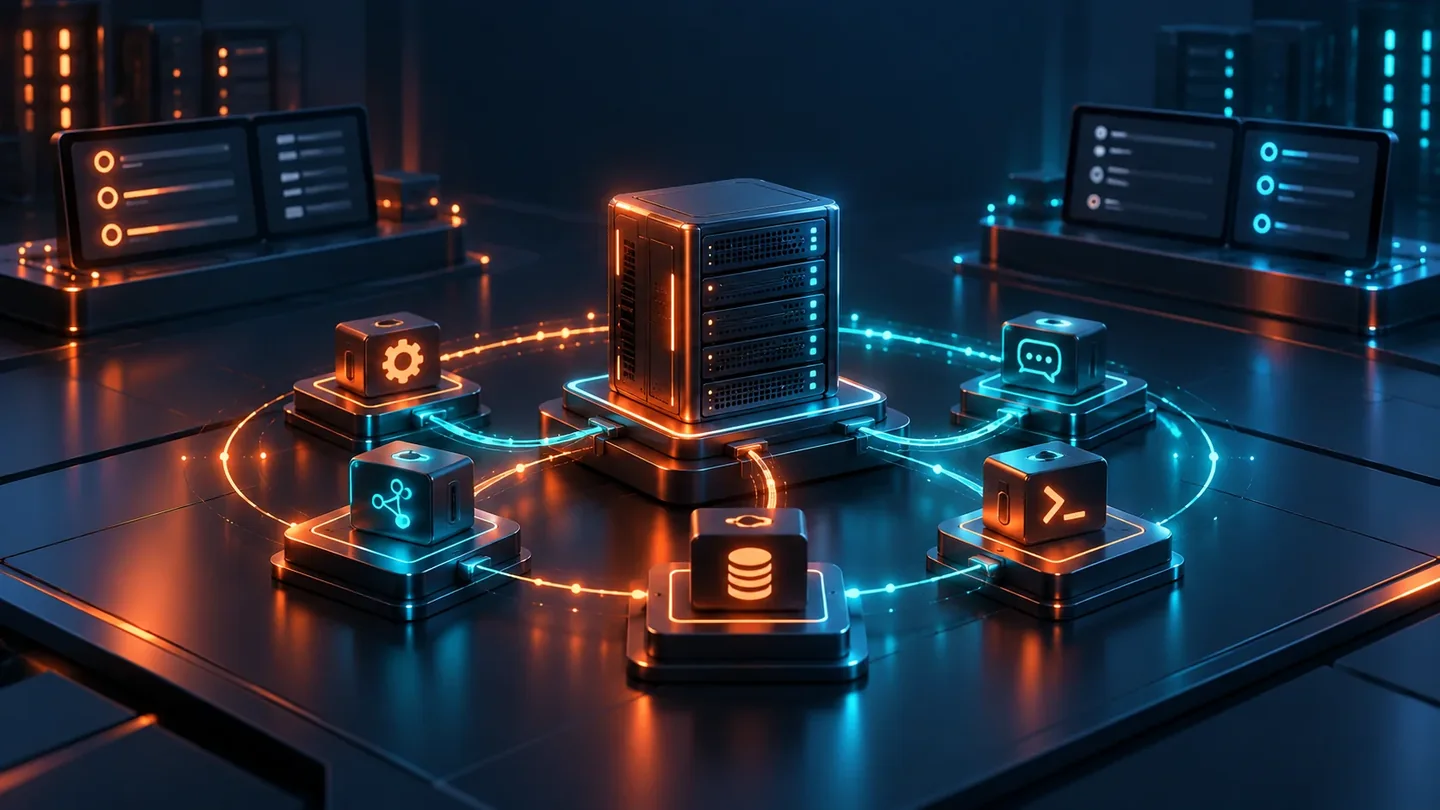
Many agent runtimes are built around a session: open a window, hand the agent a task, watch it work, then close the tab. The Hermes documentation describes a different starting point: an agent that persists between conversations, carries reusable procedures, reaches people through configured channels, and can begin work on a schedule. That shift in assumption changes the operational model downstream. The useful question is not which runtime wins in the abstract, but which tradeoffs fit how long your agent must live and who must operate it.
This is a structural comparison, not a scoreboard. Claims about Hermes below come from its published documentation; claims about other runtimes stay at the category level because vendor capabilities change faster than comparison articles age. Use this article to shortlist runtime shapes, then verify current details against each project's documentation.
Hermes vs other agent runtimes: the short answer
Hermes is documented for long-lived agents: durable skills act as procedural memory, tool sets and permissions define capability, configured channels route work, scheduling lets the agent start without an inbound message, and local execution keeps tool execution on hardware you control. Code-first frameworks are stronger for deterministic pipelines; hosted platforms shorten time to first result; chat-first assistants are strongest inside an interactive session. The rest of this article explains the tradeoffs behind that summary.
Six criteria that separate agent runtimes
Feature grids mislead here because almost every runtime can claim tools, memory and integrations while meaning something different by each. Six criteria do most of the real work:
- Persistence and state ownership. Where do identity, memory and history live, and what survives a restart?
- Procedure reuse. Is there a first-class way to store how a job is done, or does the procedure live in a prompt someone pastes each time?
- Capability surface. Which tools exist, who grants access, and how is a denial surfaced to the operator?
- Reach. Through which channels can a person or system hand the agent work?
- Autonomy trigger. Can the agent start without an inbound message?
- Operational load. Who patches, backs up, monitors and upgrades it, and where does data travel?
Most disagreements about the best runtime are really disagreements about which of these six dominates a particular workload.
Hermes's documented model: long-running agents, not chat windows
The Hermes documentation reads as though the unit of work is an agent that exists continuously rather than a conversation that ends. Five documented concepts carry most of that weight.
Skills as procedural memory
Hermes describes skills as procedural memory: durable, reusable descriptions of how a task is done, kept outside the live conversation and brought in when relevant. The practical consequence is cumulative improvement. When a workflow changes — a new API field, an extra approval step — you update the skill rather than every prompt where the procedure was retyped. It also gives you a reviewable artifact that can be diffed, versioned and handed to a teammate. The tradeoff is authorship discipline: a vague skill produces confidently wrong behavior at scale, and stale skills are harder to notice than stale prompts because nobody rereads a library they trust.
Tool sets and permissions
Tool sets are documented as an explicit part of an agent's configuration, with permissions governing what it may do. That turns capability into a declared surface rather than an ambient one. It matters more for long-lived agents than for chat assistants: an agent running unattended for weeks will eventually meet an ambiguous situation, and the permission boundary is what keeps ambiguity from becoming an incident. The cost is up-front configuration and the recurring work of revisiting grants as the agent's role expands.
Channel routing
Instead of assuming a single interface, the docs describe routing work to agents through configured channels, so the same agent can serve one person on one surface and a team on another. In practice the hard part is not the connector but the mapping: which identity is speaking, which agent should answer, and what context travels with the message. Confirm which channels are currently supported before designing around a specific one.
Scheduling and autonomous triggers
Scheduling is what most clearly separates a runtime from a chat window: the agent can be triggered by time or by a recurring job rather than only by a human message. A daily triage pass, a weekly summary, a periodic check against an internal system — ordinary cron-shaped work, except the agent needs somewhere to live between runs. This loops back to persistence, and to whether your host is actually always on.
Local execution model
Hermes is documented around local execution: the agent runs on hardware you control, and tool execution happens in that environment. The benefit is a short path to your files, local services and private network, plus a data path you can inspect yourself. The cost is that availability, backups, upgrades and secrets management become your responsibility. A sleeping laptop is not an always-on agent host, and an in-house server deserves the same care as any other production service.
How other agent runtime categories compare
Four shapes come up most often for builders working with several agent tools. Each is legitimate for the right job. These are category-level generalisations and should be checked against each project's own documentation.
Code-first orchestration frameworks
You define graphs, state machines or agent roles in code. Strengths: explicit control flow, unit-testable steps, reproducibility, and everything lives in version control alongside your application. Limits: durability, retries, scheduling, channel surfaces and permission UX are things you build or bolt on, and the agent is something you invoke rather than something that is running.
Hosted agent platforms
Managed infrastructure with connectors, logs and quick onboarding. Strengths: fastest route from idea to a working agent, and someone else handles uptime. Limits: execution and data path sit with the vendor, quotas and capabilities shift over time, and reaching a private network or a local daemon is usually awkward or impossible.
Chat-first assistants in editors and desktops
The inner loop is excellent: tight workspace context, fast iteration, familiar interface. Limits: the unit is the session. There is no scheduler, no channel routing, and identity rarely outlives the project, so anything that must run while you are asleep is outside its scope.
Self-hosted personal assistant stacks
Plugin ecosystems, local integrations and always-on daemons. Strengths: strong home-lab and personal-automation story, and data stays close. Limits: autonomy is often rule- or script-bound, interfaces are frequently singular, and reusable procedure tends to be ad hoc rather than a named, reviewable artifact.
Where Hermes's model fits best
- Continuity is the point. Agents that accumulate context across weeks benefit from persistence and skills far more than one-shot task runners do.
- Procedure-heavy work. Recurring operations with real steps — triage, reconciliation, reporting — improve when the procedure is an artifact rather than a habit.
- Mixed human surfaces. Routing lets one agent serve a person in one place and a team in another without duplicating it.
- Private environment access. Local execution shortens the path to files, internal services and network resources you would rather not expose.
Where Hermes's tradeoffs show up
- You are the operator. Local execution trades managed convenience for control; monitoring, backups and upgrades are yours.
- Skill quality drifts. A library of procedures needs review the way code needs review, and it is easy to skip.
- Permission creep. Grants added for one task tend to stay. Without periodic review, the declared surface slowly becomes an ambient one.
- Less natural for deterministic pipelines. If the work is a fixed sequence with strict ordering and no judgement calls, an orchestration framework gives you tighter, testable control.
- Setup before value. Channel mapping, permissions and skills all cost time before the first useful autonomous run.
Which setup fits? Five example scenarios
- Personal research and ops agent on a home server. Runs continuously, carries skills for recurring research and inbox-style triage, and is reachable from a chat app. Hermes's shape fits closely, provided you treat the host as a service.
- Small team agent across several chat channels. Routing and permissions are the deciding features; the open question is identity mapping, not model choice. Hermes fits if the channels you need are supported and you can define who the agent answers to.
- Regulated workload on a private network. Local execution is the strong argument; verify exactly what leaves the machine on model calls before assuming isolation.
- Nightly data pipeline with fixed steps. Prefer a code-first orchestration framework with tests and CI; wrap Hermes around it later only if you need a conversational or scheduled interface on top.
- A demo needed this week. A hosted platform will usually beat a self-operated runtime on time-to-first-result; migrate when the operational requirements become clear.
Practical decision rubric: Hermes vs other runtime shapes
| Criterion | Hermes (documented model) | Orchestration framework | Hosted platform | Chat-first assistant |
|---|---|---|---|---|
| Persistence across sessions | Core design assumption | You design it | Usually managed for you | Weak |
| Reusable procedure | Skills | Code modules | Varies | Prompts and context |
| Permission model | Declared tool sets | What your code allows | Platform-defined | Interactive approvals |
| Channel reach | Routed channels | You build adapters | Connector catalogue | Single interface |
| Scheduled autonomy | Documented | You build it | Varies by plan | Absent |
| Deterministic control | Partial | Strong | Partial | Weak |
| Operational effort | Yours | Yours | Vendor's | Minimal |
Treat the cells as typical positioning, not vendor guarantees. Check each runtime's current documentation before committing.
Running Hermes alongside other runtimes with OPAYA
Many teams run more than one runtime: a framework for pipelines, a hosted service for prototypes, and a long-lived agent for daily operations. That creates three sets of hosts, credentials and upgrade paths. OPAYA is a desktop workspace for installing, connecting and managing agents across local computers, remote servers and Docker, so those runtimes can be operated from one place rather than from three terminal histories. It does not change Hermes's semantics: skills, permissions, routing and scheduling remain Hermes's own concepts, documented in its docs. Details of what the workspace covers are on the OPAYA features page.
Verification checklist before you commit
- Confirm how skills are loaded and updated, and whether changes take effect without a restart.
- Test a permission denial end to end and confirm the failure is visible, not silent.
- Map channel identities explicitly; send from two accounts and check which agent responds.
- Restart the host and confirm scheduled jobs and state survive.
- Trace what leaves the machine during a typical run, including logs and telemetry.
- Practise an upgrade and a rollback on a non-critical agent before you need one.
- Back up agent state and restore it to a second host to prove the backup is real.
FAQ
Is Hermes a replacement for orchestration frameworks?
Not exactly. Frameworks give you explicit, testable control flow; Hermes gives you a running agent with procedures, channels and scheduling. Many setups use both, with the framework handling deterministic steps and the agent handling judgement and interaction.
Do skills replace prompts?
No. Prompts express the current request; skills carry the reusable procedure for a class of requests. Removing prompts in favour of skills tends to produce an agent that knows how work is done but not what you want now.
Can an agent act without a message from me?
Scheduling is documented, so yes — but it requires a host that stays up. If your machine sleeps, place the agent on an always-on server or in a container with a restart policy, and verify that jobs recover after a reboot.
Does local execution mean nothing leaves my machine?
No. Tool execution is local, but model calls and any external integrations still send data off-host. Review each provider and tool you enable rather than assuming local execution implies full isolation.
How should I compare cost between runtimes?
Model the total: tokens per task, host or subscription cost, and operator hours for maintenance and review. Published per-task figures rarely match your workload, so measure a representative week on your own data.
What is the most common failure mode?
In our experience with long-lived agents, it is quiet drift: skills that no longer match reality and permissions that expanded one grant at a time. Both are fixed by scheduled review, not by switching runtimes.
If you are running a persistent Hermes agent next to other tools and want one place to install, connect and manage them across laptops, servers and containers, OPAYA is worth a look. Start from the feature overview and keep the verification checklist above beside you during setup.
Keep reading

Running Hermes on a VPS With Telegram
Deploy Hermes to a server, connect Telegram and keep it responsive without babysitting it.
Read article →
Hermes Agent Setup: From Install to First Real Workflow
Install Hermes, point it at a model, connect a chat channel and run a first task end to end.
Read article →
Claude Code on a VPS: Remote Work That Feels Local
Running Claude Code over SSH with the same projects, tools and review loop you use locally.
Read article →