 opaya
How an AI Automation Agency Delivers an Agent to a Client
From scope to signed-off handover.

Building an AI agent is a significant technical challenge, but delivering it effectively to a non-technical or semi-technical client is an operational hurdle that can determine the long-term success of your business. Mastering AI automation agency delivery requires a fundamental shift in how you approach the handover process. Far too often, development agencies build sophisticated multi-agent workflows in their own isolated environments, only to watch them fail in production because the client lacks the infrastructure, the training, or the proper credentials to keep the system running sustainably.
For an AI automation agency, the handover is not merely passing over a repository of code or an API endpoint. It is the careful transfer of an autonomous system that makes decisions, consumes external API credits, and interacts directly with the client's internal data. If not managed carefully, you risk perpetual maintenance cycles, disputed invoices, and broken workflows whenever an underlying language model is updated. This guide provides a comprehensive framework for agencies delivering agent systems, moving from the initial scope to a signed-off handover.
Pre-Flight Checklist: Prerequisites for Agent Delivery
Before writing a single line of code or connecting your first node in an agent builder, the foundation for handover must be laid. AI automation agency delivery begins during the pre-flight phase. Attempting to figure out deployment environments or API billing at the end of a project guarantees delays and frustration.
First, conduct a thorough environmental audit of the client's current technical stack. Determine whether they operate primarily on local machines, remote servers, or heavily containerized environments. You need to know their operating systems, their network restrictions, and their internal security policies regarding external data transmission.
Second, establish an access protocol. Because AI agents often require access to internal databases, CRM platforms, and communication tools (like Slack or Microsoft Teams), you need explicit, written permission and dedicated service accounts. Never use a human employee's personal credentials to authenticate an agent; if that employee leaves or changes their password, the entire automated workflow will silently fail.
Finally, identify the key stakeholders. You need a designated technical point of contact on the client side who will ultimately accept the handover. This person should be involved in the architectural discussions from day one, ensuring that the system you are building aligns with their internal IT standards and long-term maintenance capabilities.
The 6-Step Implementation and Delivery Pipeline
A structured implementation phase is critical for ensuring the client actually uses and benefits from the AI agent you have built. Follow these step-by-step principles to guarantee a smooth transition from development to production.
1. Scope the Workflow, Not the AI Tool
One of the most common mistakes agencies make is selling a specific technology rather than a business outcome. Clients do not natively care about which large language model you are using or whether you utilize LangChain or AutoGen. They care about automating their invoice reconciliation, routing customer support tickets, or generating weekly performance reports. Therefore, your delivery documentation and scoping agreement should focus entirely on the workflow.
Map out the exact inputs the agent will receive and the exact outputs it is expected to generate. Define the boundary conditions: what tasks is the agent explicitly forbidden from doing? By scoping the workflow, you protect your agency from scope creep and prevent the client from assuming the agent possesses general artificial intelligence capable of handling unmapped tasks.
2. Agree on Success Measures Up Front
Because AI systems operate probabilistically rather than deterministically, traditional software testing metrics do not always apply. An AI agent might complete a task successfully 95% of the time, but hallucinate or fail the remaining 5%. Before you build, you must define acceptable thresholds for accuracy, processing speed, and error rates.
Establish clear Key Performance Indicators (KPIs) in writing. For example, a success measure might be: "The agent will accurately extract and categorize data from 90% of incoming vendor PDFs within 30 seconds per document, flagging the remaining 10% for human review." By agreeing on these metrics early, the handover process becomes objective. When the agent hits the agreed-upon numbers during user acceptance testing (UAT), the delivery is considered complete.
3. Build Inside a Client-Owned Environment
For long-term viability, agents should be deployed in environments that the client controls. Hosting a client's agent on your agency's proprietary infrastructure creates a massive liability for your business and locks the client into a dependency they may eventually resent. If your server goes down, their business stops, and you are held responsible.
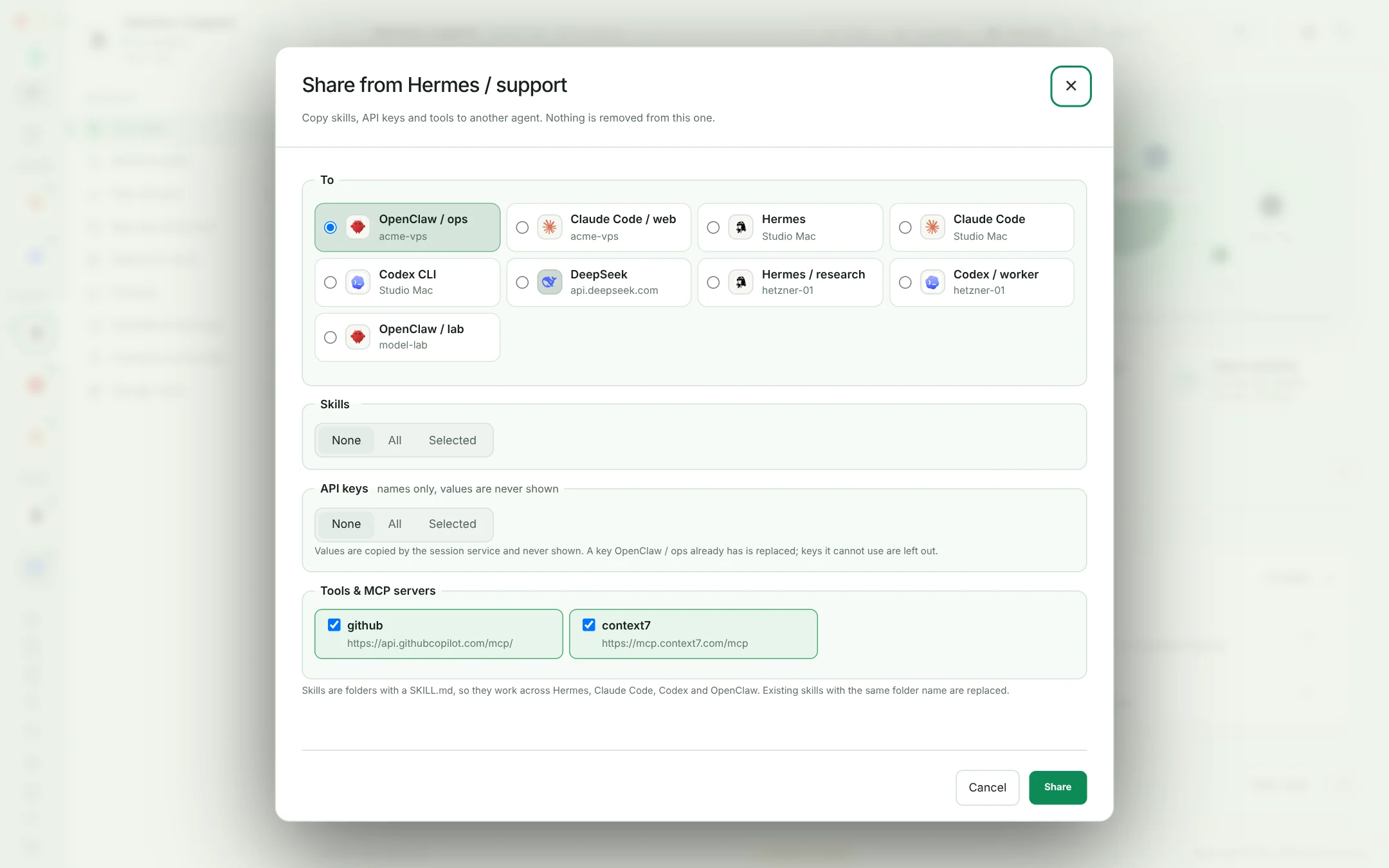
Deploy the agent directly to the client's local computers, their dedicated remote servers, or their Docker instances. This is where tools like OPAYA become invaluable. OPAYA provides a desktop workspace specifically designed for installing, connecting, and managing AI agents across these various environments. By delivering the agent via a unified workspace that the client controls, you empower them to manage their own workflows without requiring deep dev-ops knowledge, while ensuring they retain full ownership of their data and infrastructure.
4. Settle API and Credential Ownership in Writing
AI agents are incredibly credential-heavy. A standard deployment might require an OpenAI API key for reasoning, a Pinecone API key for vector storage, a SendGrid key for email notifications, and internal database credentials. The golden rule of AI automation agency delivery is: the client must own the billing accounts for all external APIs.
If your agency uses its own API keys during development, establish a strict cut-over date where the client swaps in their own keys prior to the final handover. Document this matrix of credentials clearly, specifying what each key does, where it is stored (preferably in a secure .env file or a secrets manager), and how the client can rotate the keys if they are compromised. Failing to transfer credential ownership can result in your agency absorbing massive, unexpected LLM inference costs when the client scales the agent's usage.
5. Train a Single Internal Agent Operator
Complex automated systems fail when responsibility is diffused across an organization. When you deliver the agent, identify and train a single internal champion—the "Agent Operator." This individual does not need to be a senior developer, but they must understand the fundamental architecture of the workflow.
Train this owner on how to start and stop the agent, how to read basic execution logs, how to handle flagged exceptions, and how to monitor API usage. If you are using a workspace environment to manage the agent, teach them how to navigate the interface to check the agent's status. Providing comprehensive training to this single individual ensures there is a first line of defense before the client raises a support ticket with your agency.
6. Plan the 30-Day Hypercare Phase
The handover is not the end of the project; it is the beginning of the "hypercare" phase. No matter how thoroughly you test an AI agent, contact with real-world, unpredictable data will expose edge cases. Plan for a 30-day monitoring period post-delivery.
Schedule daily asynchronous check-ins during the first week to monitor error rates and API costs. In weeks two through four, transition to weekly syncs to review the success measures you established in step two. Use this period to fine-tune system prompts, adjust temperature settings, and refine data parsing logic based on actual production data. Make it clear in your contract that this 30-day period is for iterative fixes on the agreed-upon scope, not for adding entirely new features.
Evaluating Deployment Architecture Tradeoffs
When executing an AI automation agency delivery, you will face critical architectural tradeoffs based on the client's technical maturity and security requirements. Understanding these tradeoffs is vital for recommending the right deployment strategy.
- Local Deployment: Deploying an agent directly to a client's local machine offers maximum data privacy, as sensitive information never leaves the local network (assuming local models are used). It is also cost-effective as it eliminates cloud hosting fees. However, the tradeoff is reliability; if the local machine is turned off or loses internet connection, the agent ceases to function. This is best suited for localized, non-critical batch processing.
- Remote Server / Cloud Deployment: Deploying to a remote server guarantees high availability and uptime. The agent can run 24/7 and scale resources as needed. The tradeoff here is increased complexity and recurring infrastructure costs. The client must maintain the server, apply security patches, and monitor resource consumption.
- Docker Containerization: Packaging the agent and its dependencies into a Docker container is widely considered the industry standard for reliable delivery. It ensures that the agent will run exactly the same way on the client's environment as it did on your development machine. The tradeoff is that the client needs a basic understanding of container management to restart or update the image, though utilizing visual workspace managers can heavily mitigate this complexity.
Handling AI Agent Edge Cases in Production
An AI agent will inevitably encounter scenarios that were not mapped during the initial scoping phase. Preparing the client for these edge cases is a crucial part of the handover process.
- API Rate Limits and Timeouts: External LLM providers frequently experience degraded performance or enforce strict rate limits. Your agent code must include robust retry logic with exponential backoff. During delivery, demonstrate to the client what happens when the API is down, showing them how the agent safely pauses and alerts the internal owner rather than crashing completely.
- Context Window Overflow: If the agent processes documents or communication threads, it may eventually receive an input that exceeds the model's maximum context window. Ensure your agent is equipped with text chunking or summarization fallbacks, and document this behavior so the client understands why a massive PDF might take longer to process or yield slightly different results.
- Hallucinations and Formatting Errors: Even heavily constrained agents will occasionally return data in the wrong format (e.g., providing plain text instead of the requested JSON schema). Implement strict output parsing and validation steps. If the output is invalid, the agent should automatically retry the prompt. If it fails repeatedly, it must trigger a "human-in-the-loop" notification.
The Final Pre-Handover Verification Checklist
Do not initiate the final client handover until you have confidently verified every item on this test checklist. This ensures the delivery is professional, complete, and verifiable.
- Environment Validation: The agent installs and runs smoothly in the client's designated environment (local, remote, or Docker) without relying on the agency's local dev files.
- Credential Swap: All agency API keys, database credentials, and service accounts have been completely removed and replaced with the client's production credentials.
- Cost Monitoring: Spending limits or billing alerts have been configured on the client's LLM provider accounts to prevent budget overruns.
- Error Handling: Simulated API failures and malformed data inputs trigger the correct fallback procedures and human-in-the-loop alerts rather than silent crashes.
- Logging and Auditing: The agent successfully writes execution logs to a designated folder or logging service that the client can easily access and read.
- Documentation Complete: The client has received a comprehensive ReadMe file containing start/stop commands, an architecture diagram, and a credential matrix.
- KPI Verification: The agent has been run against a sample of the client's production data and meets the accuracy and speed thresholds agreed upon during scoping.
- Operator Training: The designated internal owner has successfully started the agent, monitored a task, and accessed the logs without agency assistance.
Frequently Asked Questions About AI Agency Delivery
How should we price the delivery and maintenance phase?
Most successful agencies separate the build cost from the maintenance cost. Charge a fixed fee for the scoping, development, and standard delivery. Offer a separate, optional monthly retainer for ongoing prompt optimization, model upgrades, and deeper technical support beyond the initial 30-day hypercare period.
What if the client refuses to manage their own environment?
If a client insists that your agency hosts the agent, you must transition from an agency model to a managed service provider (MSP) model. You must charge a premium recurring fee to cover the server costs, the liability of data hosting, and the 24/7 monitoring required to keep their workflow operational.
How do we handle underlying model deprecation?
AI providers frequently update or retire specific models. Address this in your handover documentation by specifying exactly which model version the agent is built upon. Make it clear that transitioning to a newer model version (which may require prompt rewriting or logic adjustments) falls outside the original delivery scope and constitutes a new maintenance engagement.
How much technical knowledge does the client's internal owner need?
They do not need to be software engineers, but they should be highly comfortable with software operations. They need to understand basic concepts like API keys, file paths, and simple error logs. If you deploy using a visual workspace to manage the agents, the technical barrier is significantly lowered.
Next Action: Standardize Deliveries with OPAYA
The difference between an agency that scales and an agency that drowns in maintenance debt lies entirely in the delivery process. By scoping workflows tightly, defining objective success metrics, transferring credential ownership, and thoroughly training an internal champion, you set your clients up for long-term autonomous success.
To eliminate the friction of deploying and managing complex multi-agent setups across different client environments, explore OPAYA. Designed for developers and operators who use several agent tools, OPAYA provides a unified desktop workspace for installing, connecting, and managing AI agents seamlessly on local computers, remote servers, and Docker instances. Standardize your agency deliveries and give your clients a professional, manageable interface for their new automated workforce.
Keep reading

The Agent Manager's Scoreboard: What to Track Across Every Machine
A short list of signals worth watching when agents run on several machines and for several people.
Read article →
The Vibe Coder's Stack: Every Agent in One Window
How solo builders keep Claude Code, Codex, Hermes and local models side by side without juggling windows.
Read article →
Local vs Remote AI Agents: Where Should Each Task Run?
A practical decision framework for running AI agents on your computer or a server.
Read article →